What Is an HTML/CSS File?
HTML and CSS are the basic technologies used to create websites.
In simple words, HTML is responsible for the structure of a webpage, while CSS controls its appearance and design.
You can imagine HTML as the “skeleton” of a website: headings, text, images, buttons, and menus.
CSS is like the “clothing and decoration” that makes the website beautiful with colors, fonts, spacing, animations, and layouts.
For example, HTML creates a button, and CSS makes that button blue, rounded, and animated when the mouse moves over it.
Without CSS, websites would look very simple and plain.
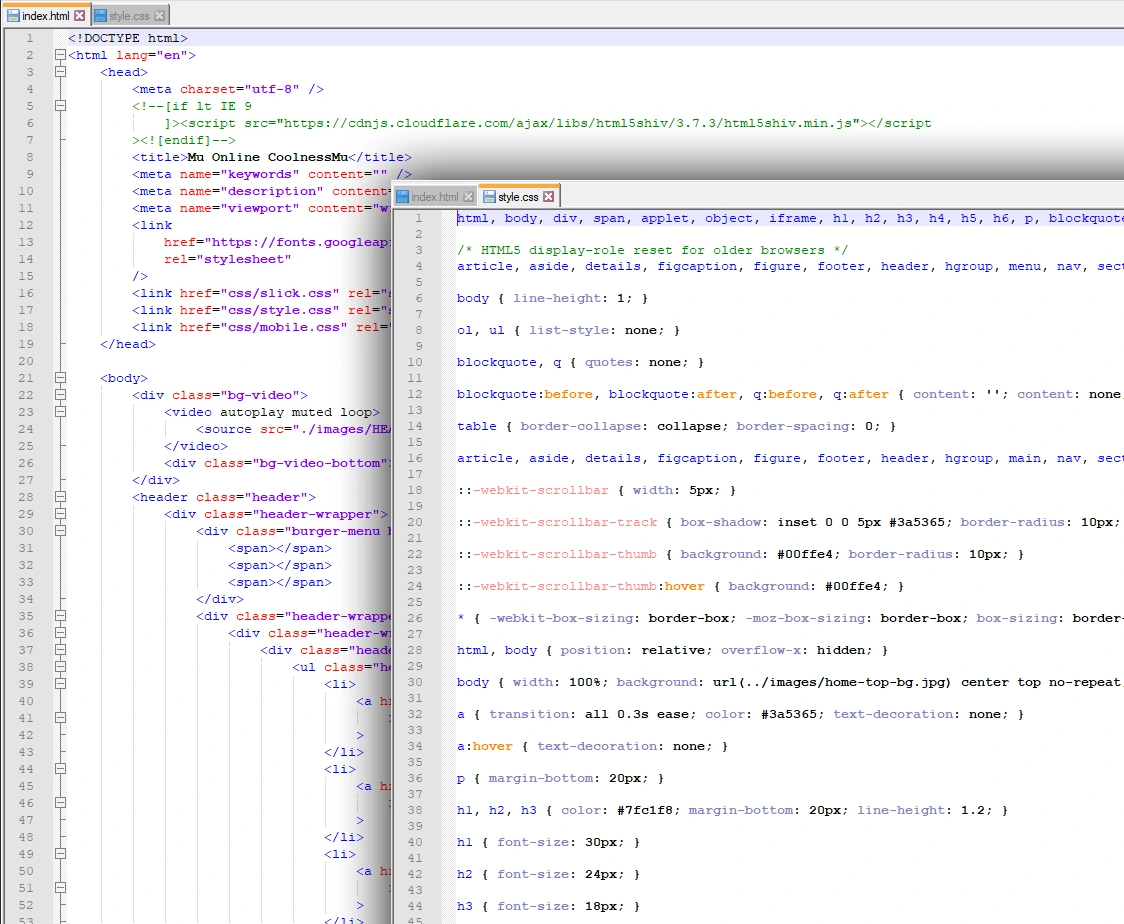
An HTML/CSS template is often called “website layout” or “frontend design.”
However, it is important to understand that HTML/CSS is NOT a ready-made website engine or CMS.
It does not include an admin panel, database, authorization system, or dynamic functionality by default.
To make the website fully functional, the HTML/CSS layout must be integrated into a CMS or backend system such as WordPress, OpenCart, Laravel, or a custom-built engine.
This integration connects the design with real content, user accounts, products, blogs, and other dynamic features.
Advantages of HTML/CSS:
- Fast loading speed.
- Flexible and customizable design.
- Responsive layouts for mobile devices.
- Clean structure for SEO optimization.

Disadvantages of HTML/CSS:
- Not a standalone website system.
- Requires backend integration for advanced functionality.
- Needs developer knowledge for editing and support.
In short, HTML/CSS is the visual foundation of a website, but additional backend development is required to turn it into a complete working web project.
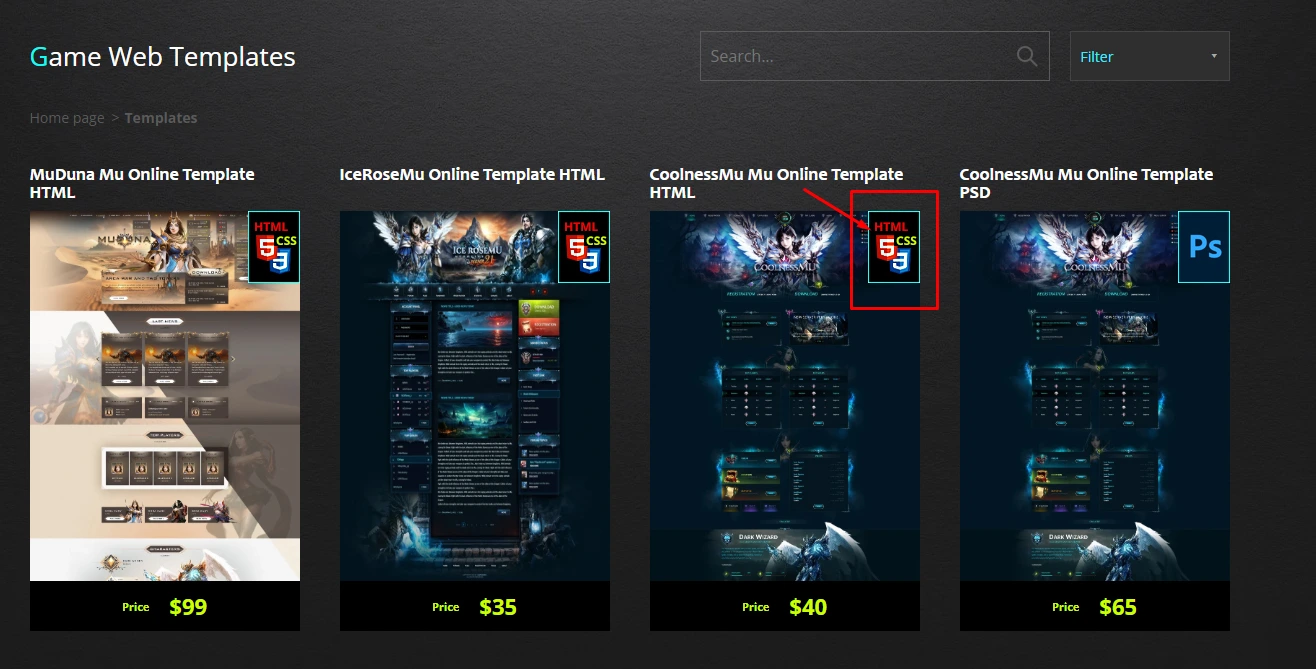
You can see an example of one such template here: CoolnessMu Mu Online Template HTML